
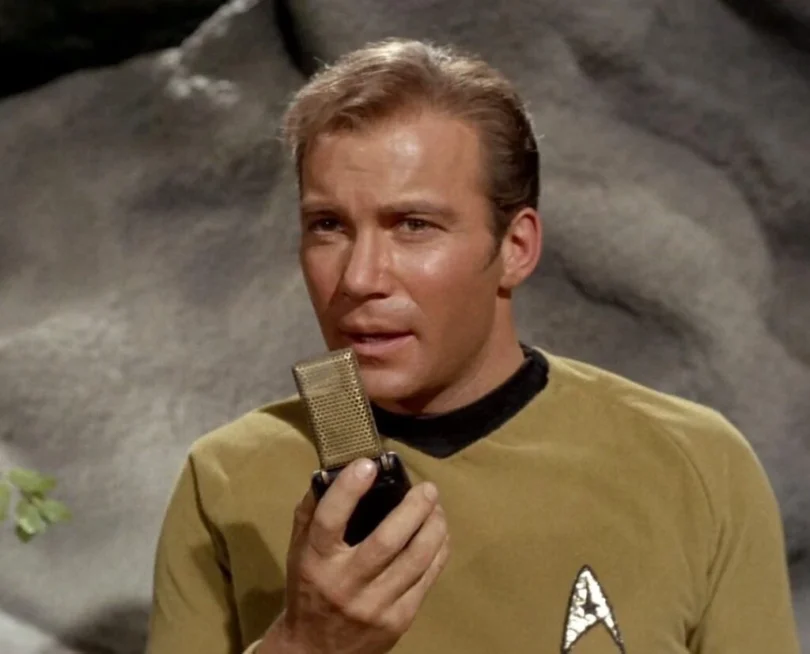
Captain James T. Kirk spent his life issuing orders, challenging impossible odds and talking his way through dangers that would have stopped a more cautious explorer. Yet when the end arrived in Star Trek Generations, released in 1994, the legendary captain had no sweeping speech left to deliver.
His final words were simply: “Oh, my.”
For a character so closely associated with action, the smallness of that farewell is startling. William Shatner allows the commander to fall away, leaving a person confronting something he cannot command. The line can sound surprised, vulnerable, even unsettled. Its power lies in how little it explains.
Kirk has reached the edge of the map. For once, nobody can tell him what comes next.
One last chance to make a difference
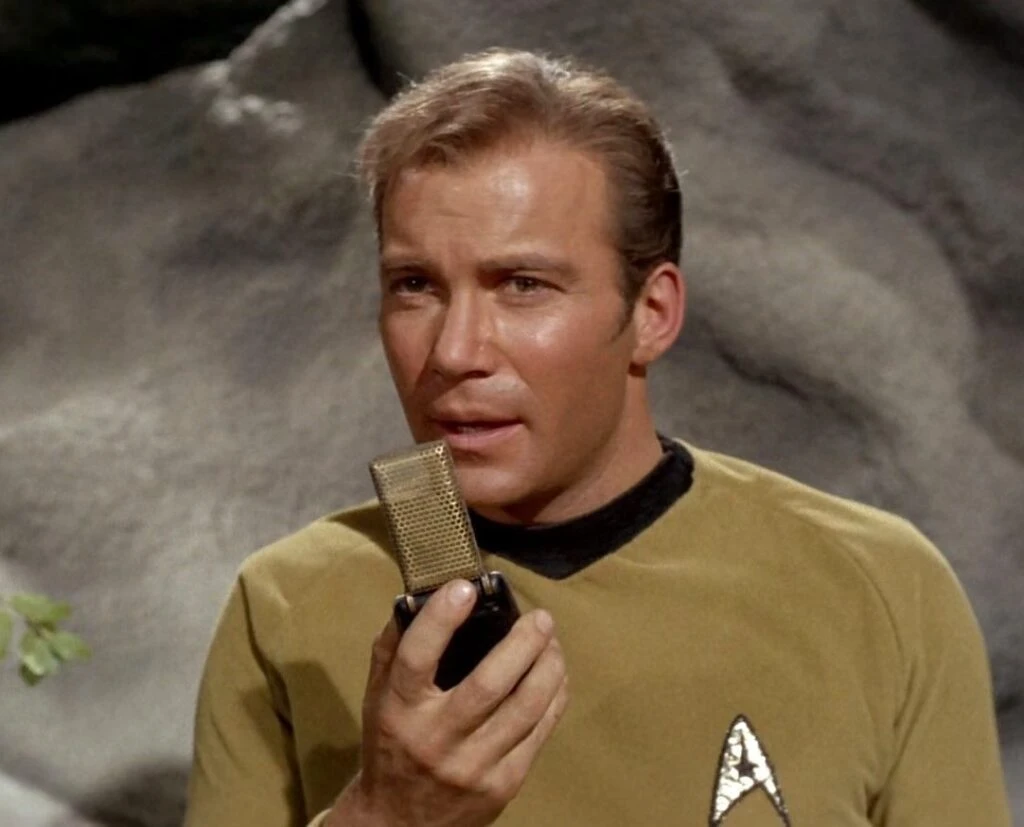
In Generations, Kirk joins Captain Jean-Luc Picard to stop Tolian Soran from destroying a star. Their alliance takes them to Veridian III, where Kirk is fatally injured when a metal bridge collapses. Picard reaches him afterward, giving the scene an intimacy very different from a death witnessed by an entire crew.
The mission follows Kirk’s time inside the Nexus, a phenomenon where desire can become an enveloping reality. He could remain within that comfort. Instead, he returns with Picard to a world where choices carry consequences.
That decision gives his death its moral weight. Kirk accepts danger because other lives matter. However viewers feel about the mechanics of his exit, his last act remains consistent with the captain who repeatedly put himself between his crew and catastrophe.
As he lies dying, he asks whether they made a difference. It is an extraordinarily modest question for a man with an extraordinary history: did this effort help someone?
That question also shifts the measure of a life away from its public reputation. Teachers, parents, caregivers and friends may never receive a captain’s ceremony, yet their actions change what becomes possible for someone else. Kirk’s concern is recognizable because it is human in that very ordinary way.

What Shatner wanted those words to mean
In an October 2026 Esquire interview, Shatner explained that he had supplied the final phrase himself. He imagined Kirk meeting death as he had encountered unfamiliar beings and worlds: with “awe and wonder.” The intention was a last encounter with the unknown, carrying the possibility of discovery even as life ended.
That explanation gives viewers another way into the performance. Watch the moment with curiosity in mind, and the words begin to resemble an explorer’s involuntary response to something beyond his experience. Kirk’s attention seems to reach outward, even when his body can go no farther.
The scene leaves whatever he perceives outside the frame. A viewer can bring spiritual belief, skepticism or simple uncertainty to that silence. The film supplies a face, a breath and two words. Everything beyond them belongs to interpretation.
An actor’s intention cannot dictate an audience’s response. Some viewers will continue to hear apprehension in Kirk’s voice, and that tension makes the moment more interesting. Wonder can arrive with fear beside it. A man who has spent years approaching danger need not become serene or certain to remain recognizably himself.
The surprising generosity of “It was… fun”
Just before that final utterance, Kirk offers another brief assessment: “It was… fun.”
The word seems almost too casual for the occasion. He has faced losses, carried responsibility and watched friends suffer. Calling the experience fun might initially sound like an escape from its seriousness. Look closer, though, and it becomes a generous way of remembering a difficult life.
Pleasure and purpose have always lived close together in Kirk. He enjoys solving the problem, taking the chance and discovering that the universe still has surprises. His energy comes partly from that appetite. Duty asks something of him; engagement gives something back.
Perhaps that is why the line travels so well beyond science fiction. People rarely remember their richest experiences as perfectly managed affairs. They remember the friend beside them, the plan that nearly failed, the laughter afterward. A worthwhile life can contain grief and still be remembered with affection.
The people who made the voyage matter
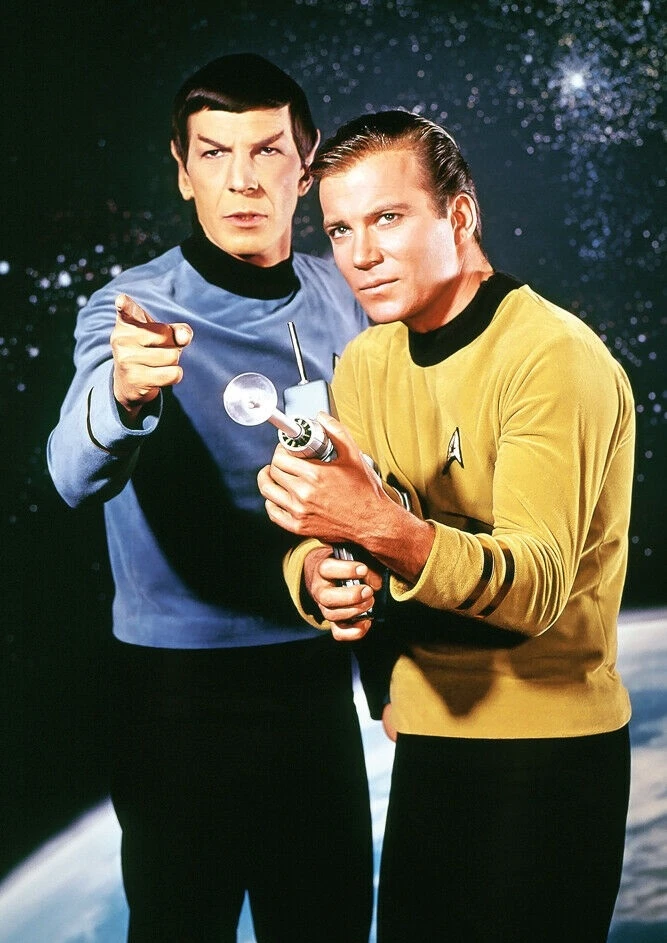
Kirk’s adventures would mean far less without the people who shared them. His friendship with Spock, played by Leonard Nimoy, gave Star Trek an emotional center that starships alone could never provide. Their differences created friction, humor and trust, while their willingness to sacrifice for each other made the relationship tangible.
Through that friendship, the series offers an attractive possibility: another mind can challenge your instincts and still become essential to your life. Kirk’s confidence gains depth because someone who understands him well can question it. Spock’s restraint gains warmth because someone can see through it.
By the time Kirk reaches his final scene, audiences carry those relationships with them. Picard is the person beside him, but the accumulated memory belongs to a much larger company. We mourn the captain partly because we remember whom he loved.
A farewell that leaves room for wonder
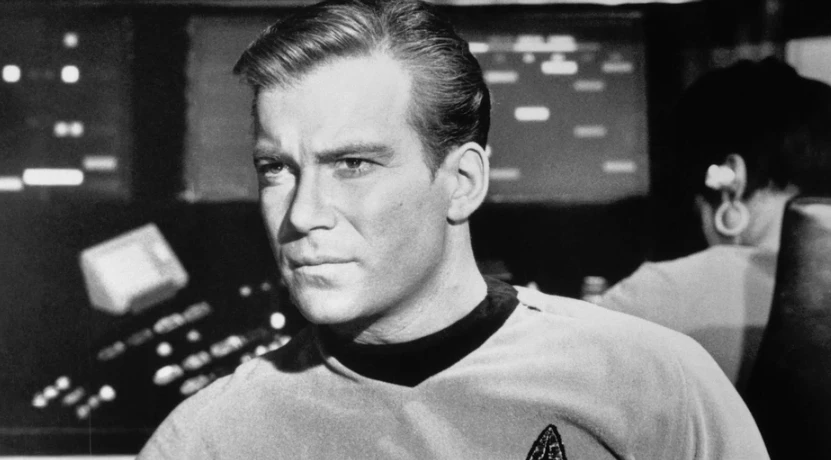
The ending has always invited disagreement. In a 2011 StarTrek.com interview, Shatner said he wished he had pressed for a more dignified departure for Kirk. Admiring the final words does not require admiring every decision that placed him beneath that wreckage.
These are words people use when a view opens unexpectedly, when news interrupts the day, when something familiar becomes strange. Their familiarity brings the distant future within reach of anyone who has ever been astonished.
Still, the scene survives its awkwardness. Its scale contracts until there is only one person trying to understand his last moment. Even the most capable among us eventually encounter a question that experience cannot answer.
Kirk’s farewell offers no formula for that encounter. What it offers is a possibility worth carrying into ordinary life: remain interested. Let achievement leave room for gratitude. Let age deepen attention. Let unfamiliar things have a chance to surprise you.
There is courage in making a decision with incomplete knowledge, and there is humility in admitting that knowledge remains incomplete. Kirk has spent a lifetime doing both. At the end, the man who kept going looks beyond what he knows.
“Oh, my.”
The captain’s voice falls silent. The wonder remains.


